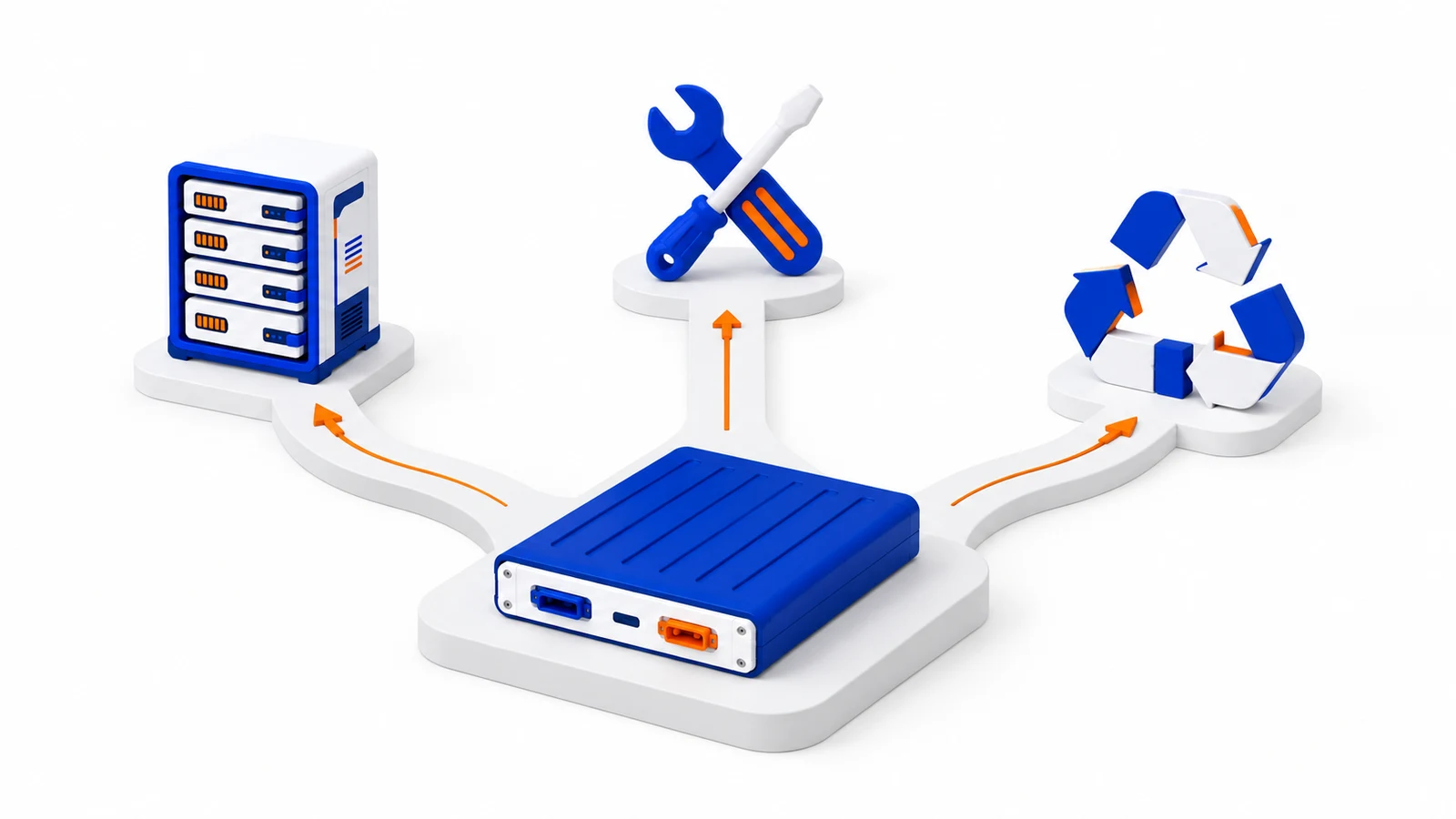
Used EV packs arrive at dismantlers, workshops and fleet depots through end-of-life vehicles, insurance write-offs and warranty replacements. They are heavy, regulated, expensive to move and difficult to assess by appearance alone. They may also suit another application.
First, understand what you hold
The value and next use of a retired pack depend on chemistry, identity, physical condition, electrical condition, fault history, quantity and available documentation. Pricing every pack as generic battery waste can overlook viable reuse or repair routes. Assuming that every pack retains useful value creates a different risk. Evidence is the starting point.
Option 1: direct or second-life reuse
Packs and modules in suitable condition may support stationary storage, repair demand, research or other defined applications. A credible match needs more than a broad State-of-Health figure. Buyers need to understand the exact product, test method, measured condition, interfaces and traceability. Our guide to State-of-Health reports explains the role and limits of this evidence.
Option 2: repair and component recovery
A pack that cannot be reused as a complete unit may contain modules or components that suit a repair route. High-voltage dismantling and component assessment require the right equipment, competence and documentation. The technical effort and credible demand must justify the route before the pack is opened.
Option 3: recycling
Packs with severe damage, deep degradation or no viable reuse demand can move to an appropriate recycling partner. Recycling remains a valid route when the available evidence supports material recovery rather than another use. Learn more about recycling as a route.
Transport and storage affect every option
Used lithium-ion batteries are regulated dangerous goods. Battery condition shapes classification, packaging, carrier selection and transport documentation. Damaged or defective packs may require stricter containment and handling. Cross-border movements can add further waste shipment requirements.
A proposal should therefore state who prepares the battery, who provides packaging, which qualified carrier performs the movement, where the battery will be held and when responsibility changes. BatteryCentr checks packs where they already are, so no extra move is needed before a decision, and the report states the handling requirements for the carrier.
How BatteryCentr fits in
BatteryCentr checks used EV packs, grades each one with a written report and routes it to its best next use. Holders pay per step and keep ownership, and each pack is rerouted to its recommended next use within our own network.
Start with the battery details and the outcome you need. Use our batch form and we will reply with the check scope for your packs.